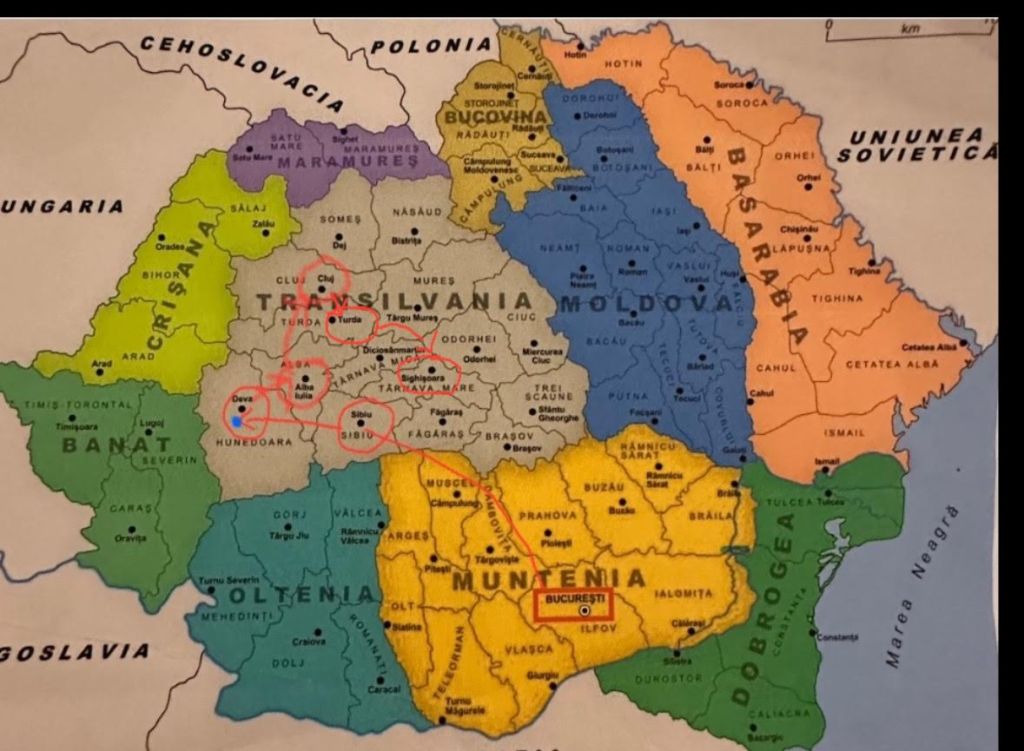
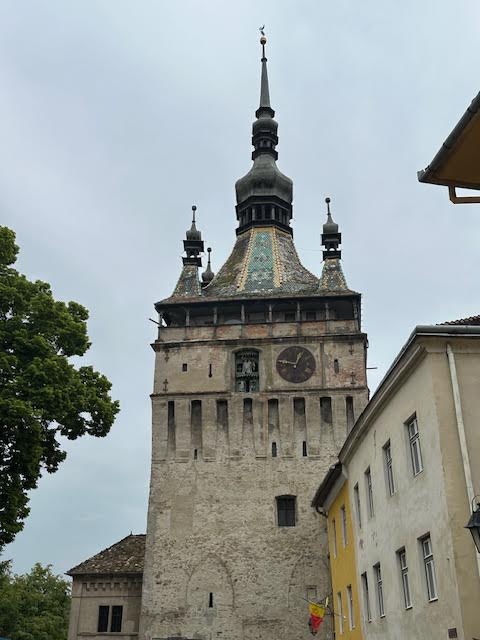
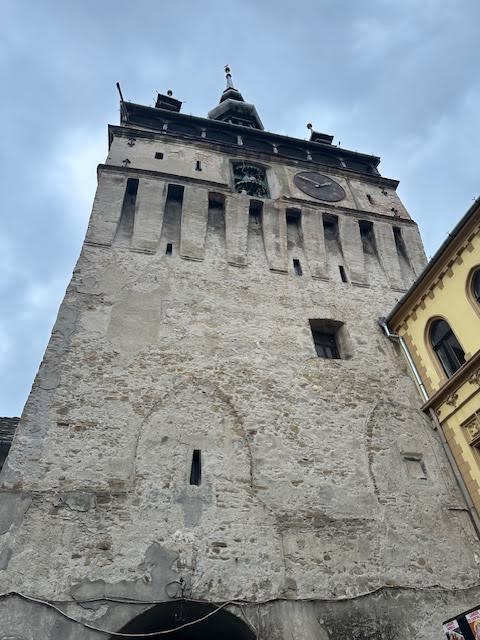
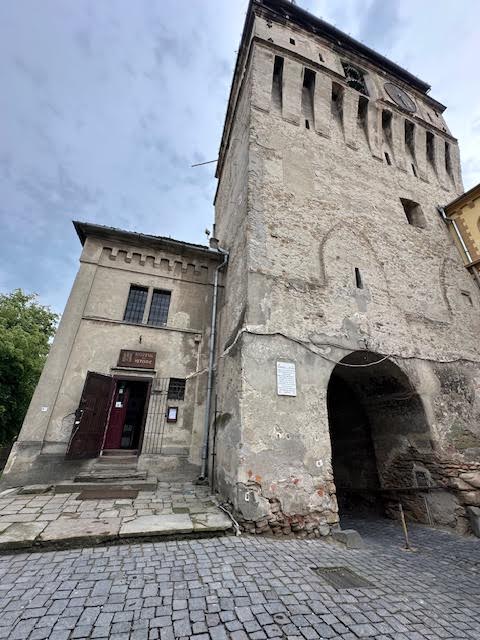
The first thing I noticed about the 14th century clock tower in the historic center of Sighisoara, is that the clock is off center. I would soon find out why, but I had more pressing questions. I had come to this Transylvanian town for a reason, to find out if vampires were real.
Cryptic directions, psychic predictions, and strange animal sightings had led me to this UNESCO World Heritage site that was rumored to be the birthplace of Vlad Tepes, the inspiration for Bram Stoker’s Dracula. Evidence of vampires had to be here.
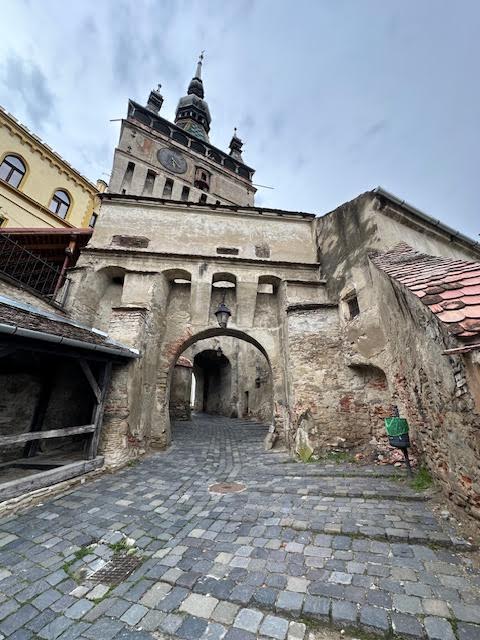
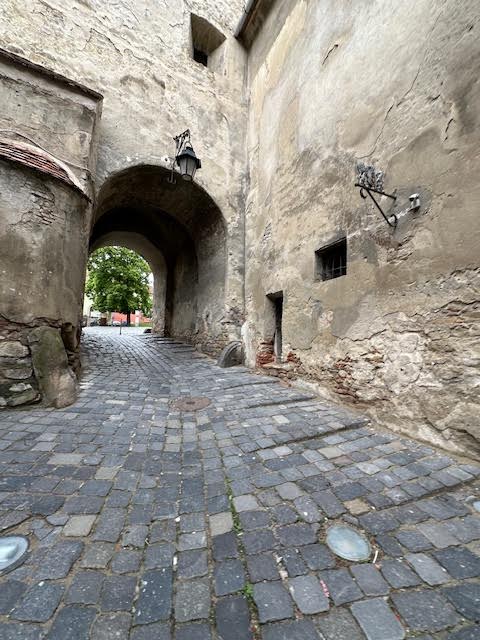
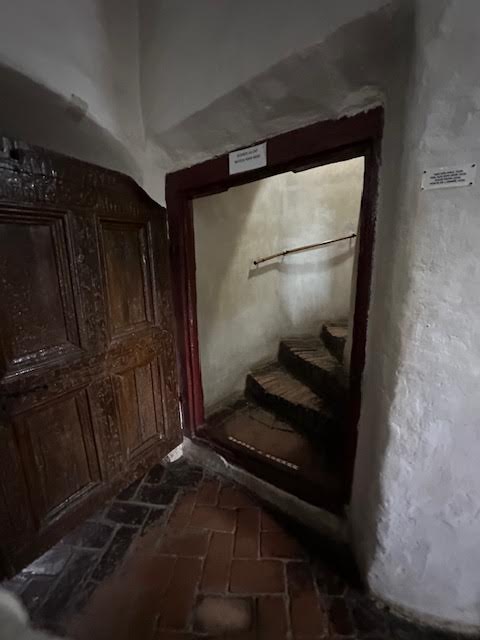
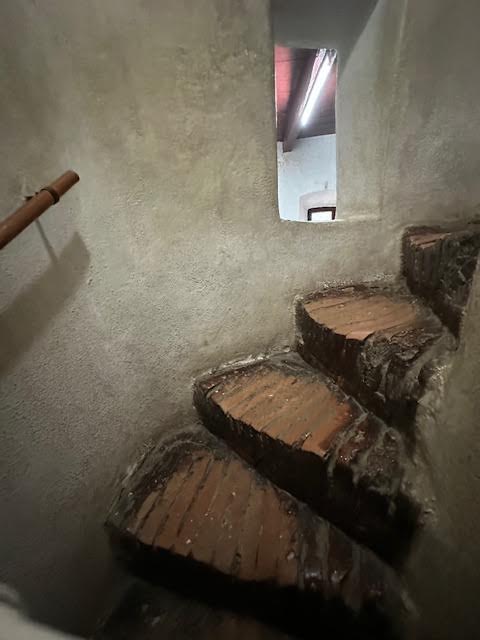
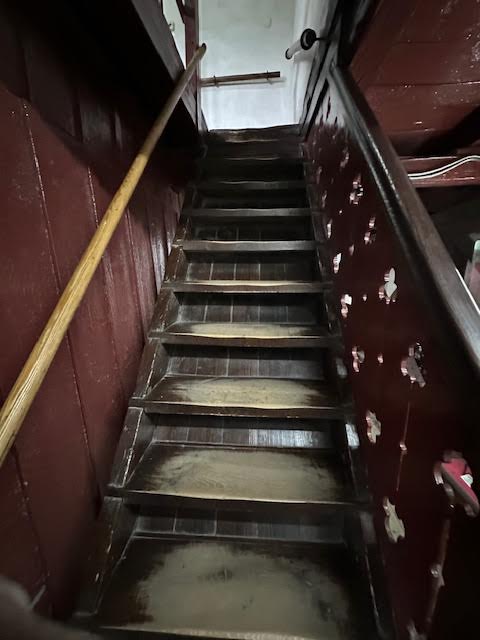
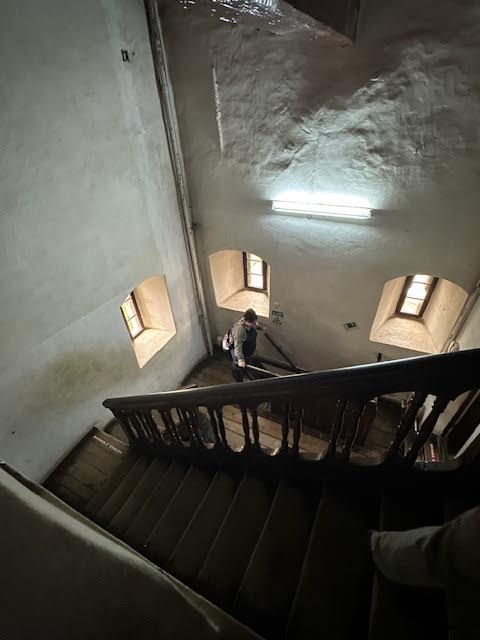
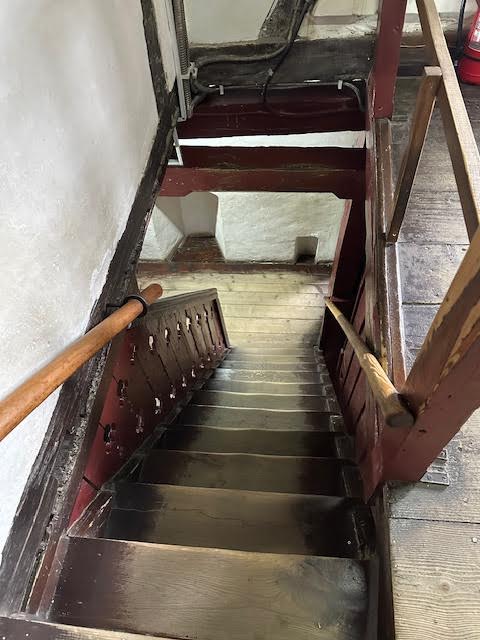
I headed along the cobblestones to the towering structure that once protected the main gate of the citadel from invaders. Despite the storm clouds spreading over the Carpathian Mountains, and a damp chill in the air, I climbed up the spiraling staircase.
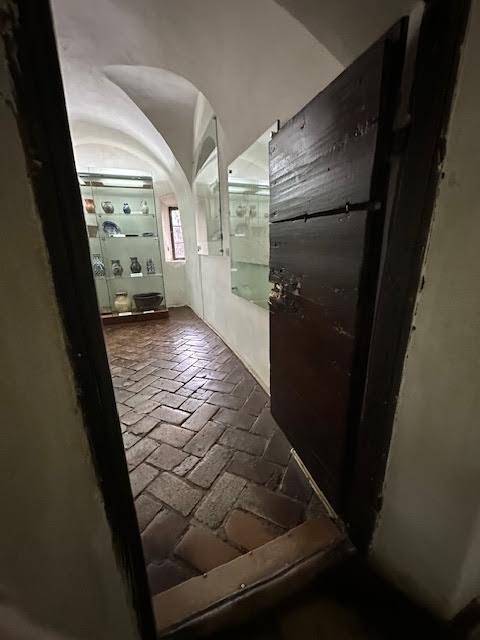
Along the way, I stopped to peer into display cases, entranced by an array of rusty weapons, yellowed books, and other medieval objects and tools. And then I went on, traversing higher, dipping into odd doors and narrow passages, until I finally reached the top of the landing.
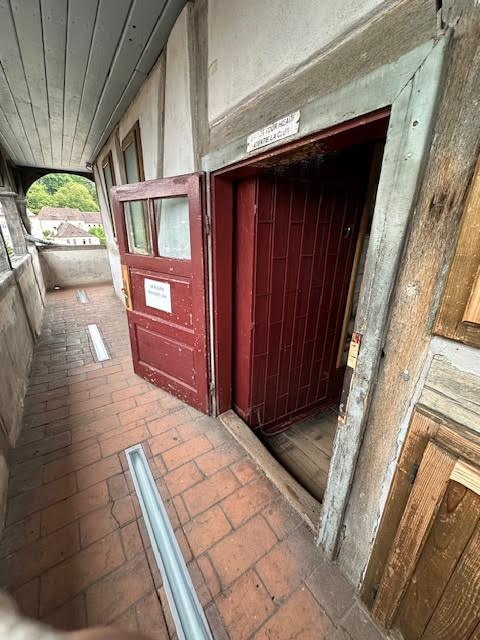
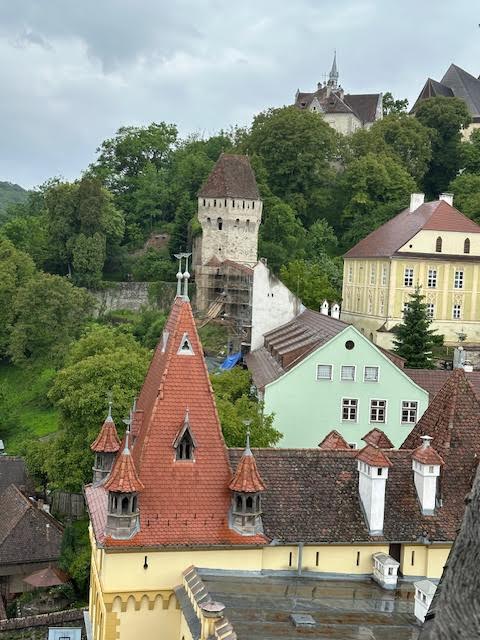
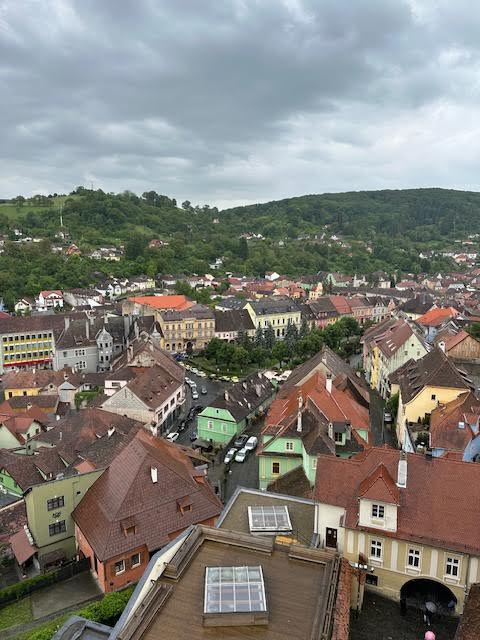
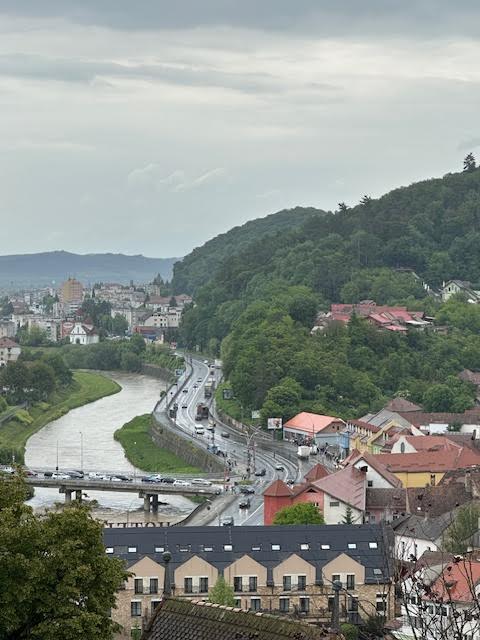
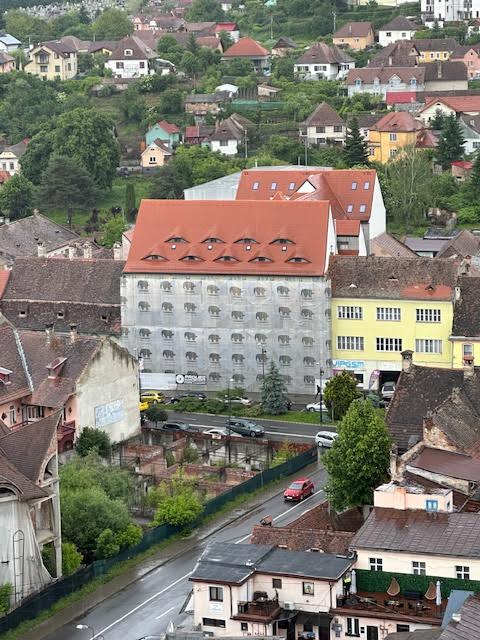
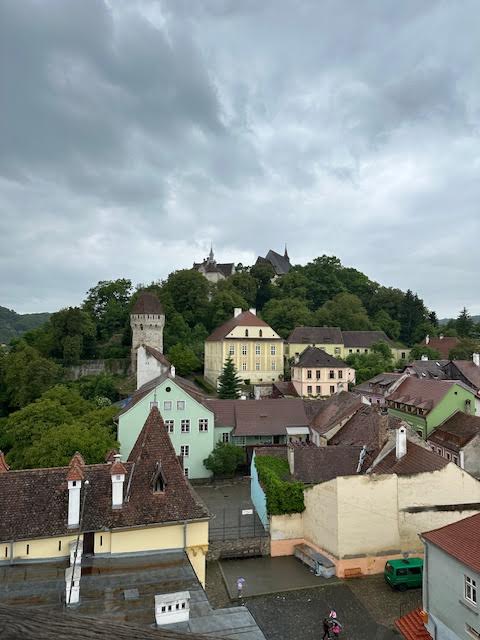
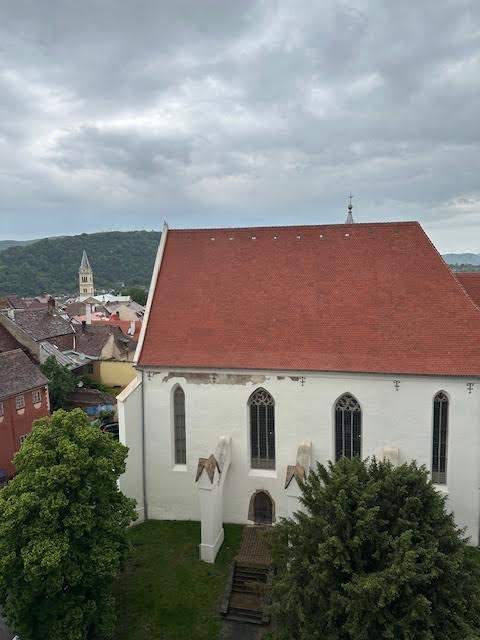
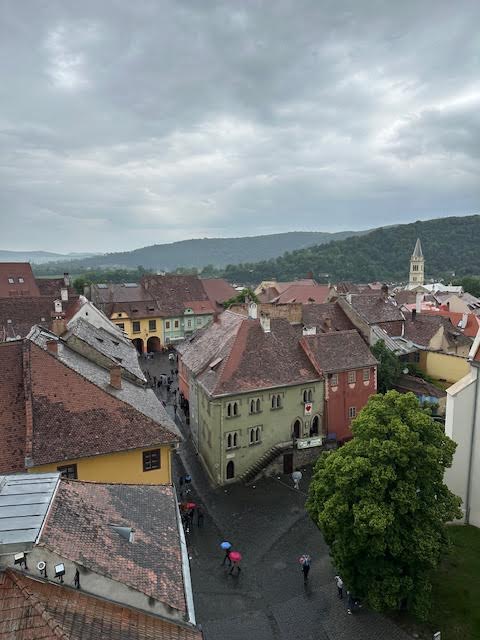
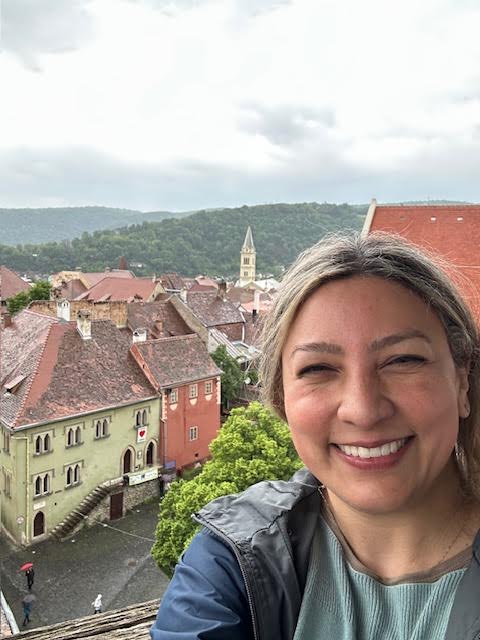
One last door, a red one, and as I passed through, my eyes widened at the view. A river winding through green valleys, a house with eyes like I had seen in Sibiu, a turret that looked like it belonged on top of Corvin Castle, it was all breathtakingly beautiful.
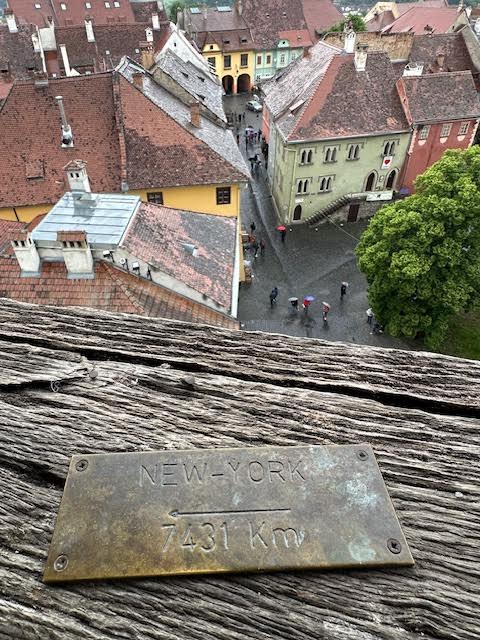
And then I noticed the gold plates, nailed in intervals along the rails, showing the direction and distance to major cities around the world. As if a bridge connected me back home, I had somehow wound up in front of a plaque for New York. A shiver went through me as I stared off into the distance. My thoughts turned to Sibiu once more, and the bell tower of Saint Mary’s, almost a straight line southeast from where I stood.
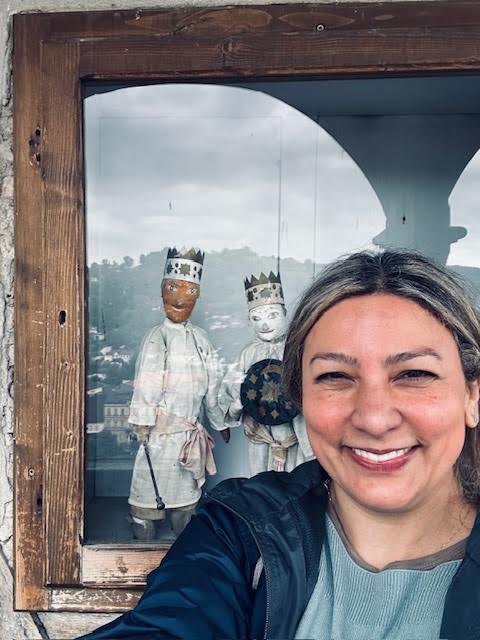
Unfortunately, there were no vampires. I turned to leave and stopped short. I had found my answer as to why the clock wasn’t centered. A different system of time held reign in this tower, and it was called, The Seven Day Figures.
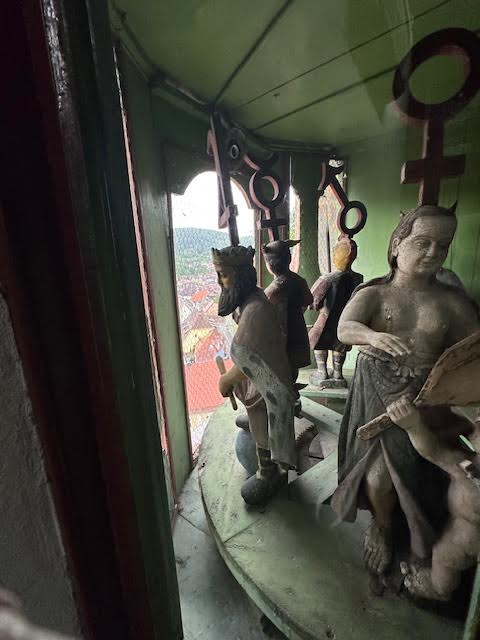
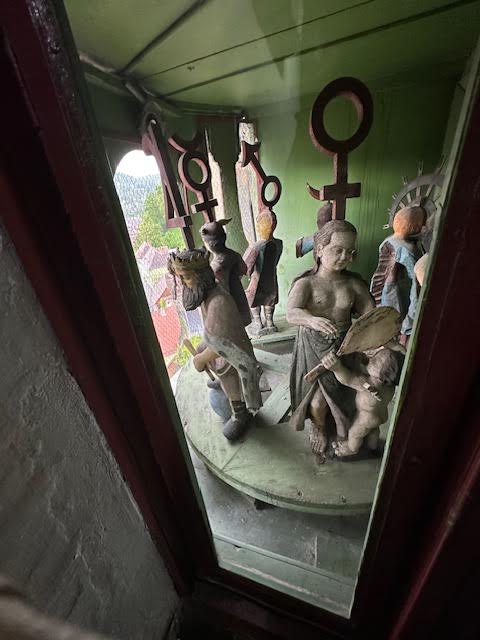
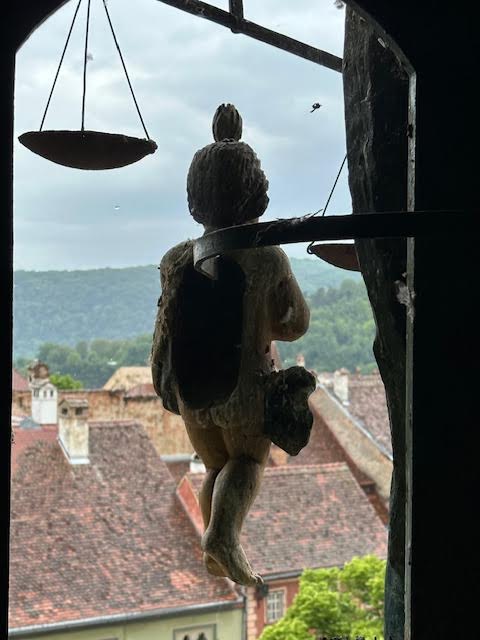
At the stroke of midnight, high above the city of Sighisoara, a platform holding seven carved figurines slowly rotates, indicating the passing day. But the wooden statues represent more than the days of the week, they hold secrets of eternal life, found in the stories of planets and gods.
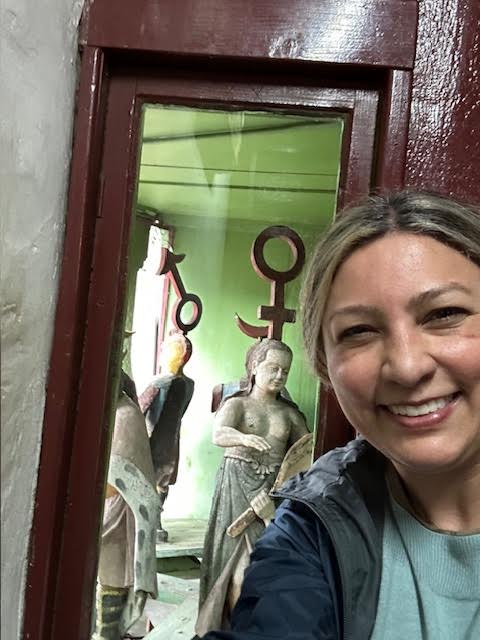
In my photos, you can see the Roman goddess, Venus, who represents Friday. The symbol for copper sits on her head, and a cherub holds up a mirror to reflect her beauty. But what you can’t see is the figure facing the town square. It’s Wednesday, and Hermes the messenger is at the helm, a guide for travelers, a Greek god who, much like a vampire, lived in the boundaries between life and death, traversing the realms of heaven, the underworld, and earth.
Was this another clue? I mulled everything over as I leaned over the side, trying to see the other figures. Far beneath me loomed the historic center that I had yet to explore, and a yellow ochre house that I had passed on my way to the tower. My eyes feverishly fixed on the sign by the door.
The house of Dracul.
I would find my answers there, unless a trickster was involved.
Dawn B~

 Dawn Berkoski
Leave a comment