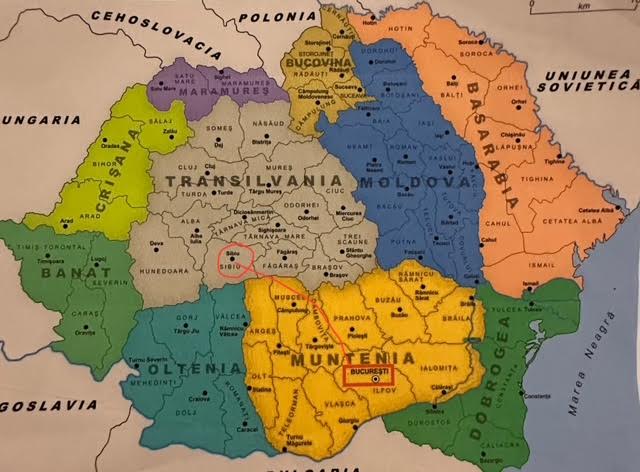
Leaving the Holy Trinity Orthodox Church in Sibiu, I continued my search for vampires.
Church bells rang in the distance, leading me back to the center of the city. A call to mass, so I followed the crowds to the Piata Mare that had existed since the 14th century. The congregation flowed into the open doors of the Holy Trinity Roman Catholic Church, and I was swept in with them. Could this be the rumored burial spot of Dracula’s son?
Spoiler: It was not.
But, oh, what a beautiful discovery: Rose-pink marble columns that soared into the heavens, lofty portraits in a pale blue sky, stained-glass that was exquisite for its simple depictions of the life of Christ. Sadly, I couldn’t take photos. Opening prayers had begun in a language I had only just begun to understand. I quietly paid my respects and went back outside where dark skies had given way to rain. I was on the hunt, not for salvation, not yet, not then, but for a rumored killer, Mihna I Cel Rau, the son of Vlad Tepes, who was apparently assassinated and buried under a Catholic Church. Only, the church I sought was no more. The parish was turned Lutheran in the 16th century, and it was around the corner in Piata Albert Huet.
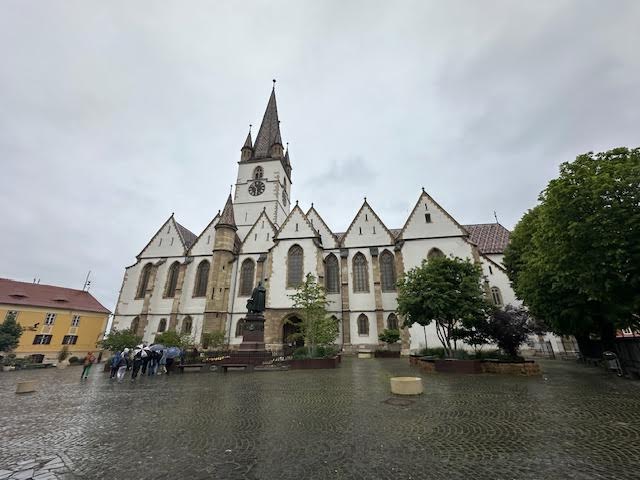
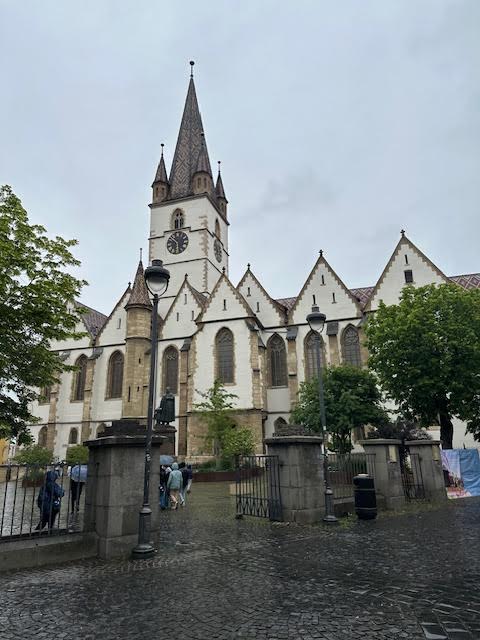
This time, I followed a group of school children through the iron gates surrounding Saint Mary Evangelical Cathedral. I stood on the cobblestones, a few meters behind, as the leader went up to the door, read the sign posted there, and returned. I frowned as the group moved on without entering. It must be closed, I thought, as they vanished behind the back of the church like a fever dream. My stomach dropped. I was too late, and I only had this one day.
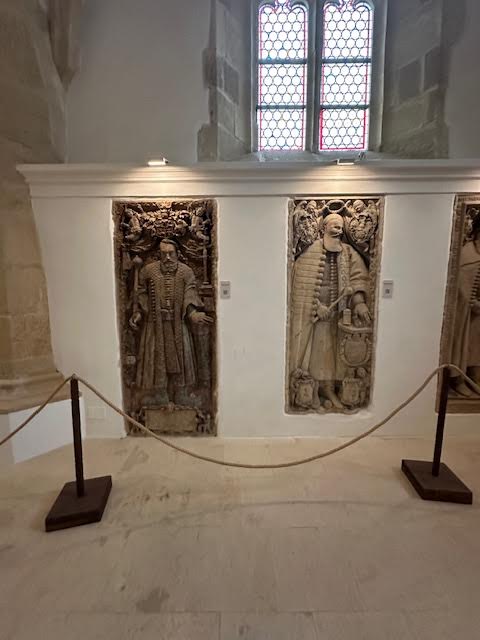
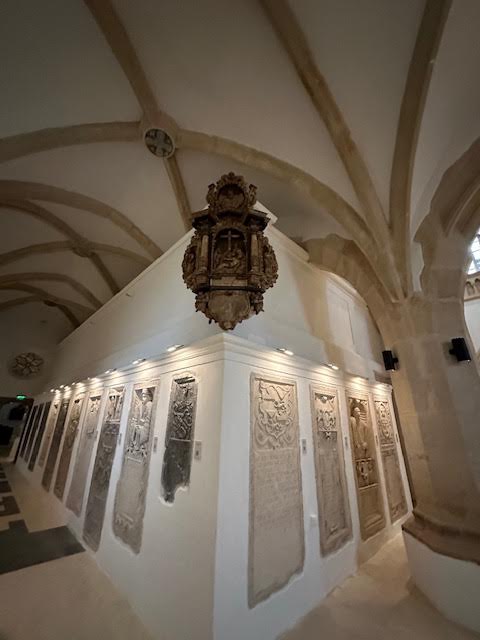
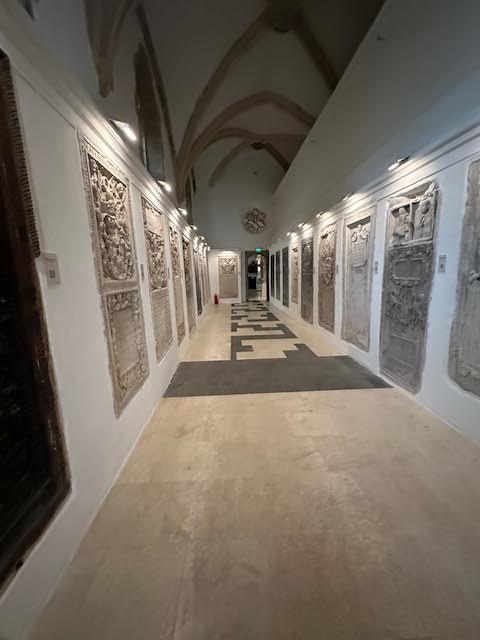
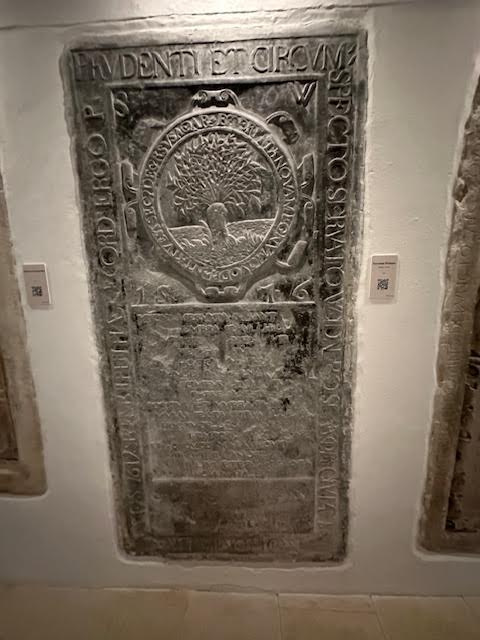
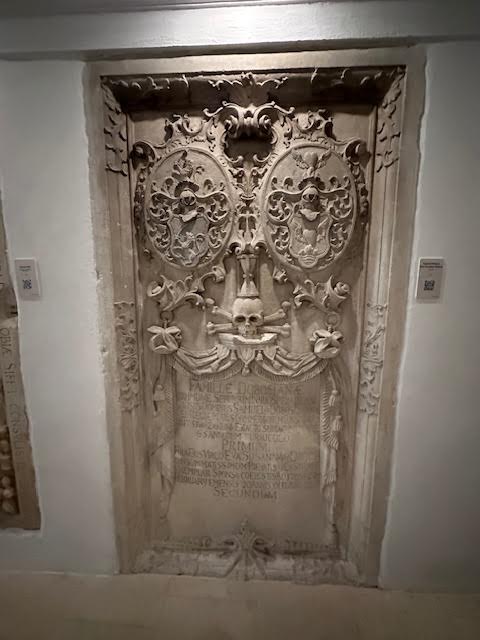
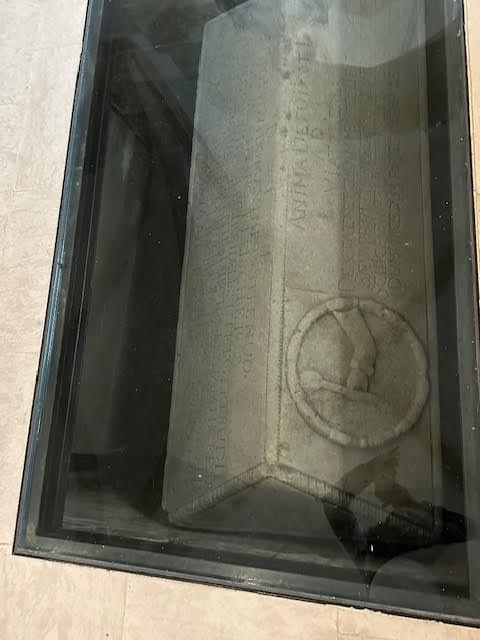
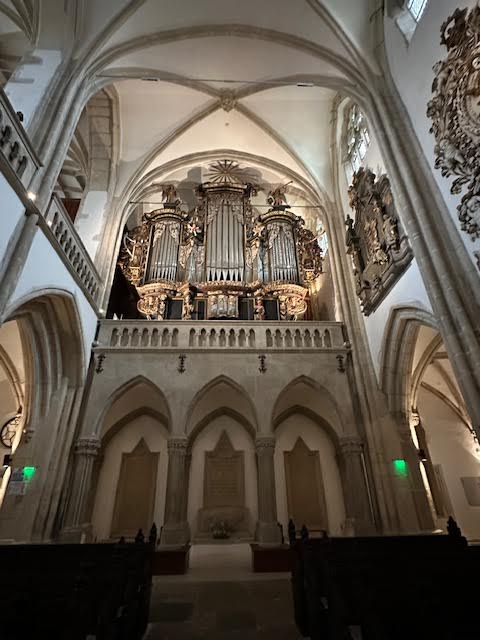
But something propelled me forward. I marched up to the door and it opened. I breathed a sigh of relief as a full wall of funerary stones greeted me. This had to be the right place. And then I saw the ticket booth. I paid, wondering if this was why the school children left, and I hoped that wasn’t the case because the church was also an interactive history museum full of knowledge. Barcodes let you scan the stories of the people buried there, and I learned the integral role that guilds played in the area throughout the years.
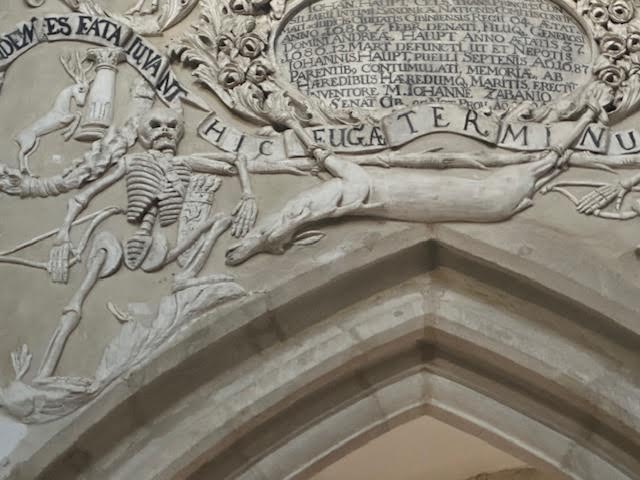
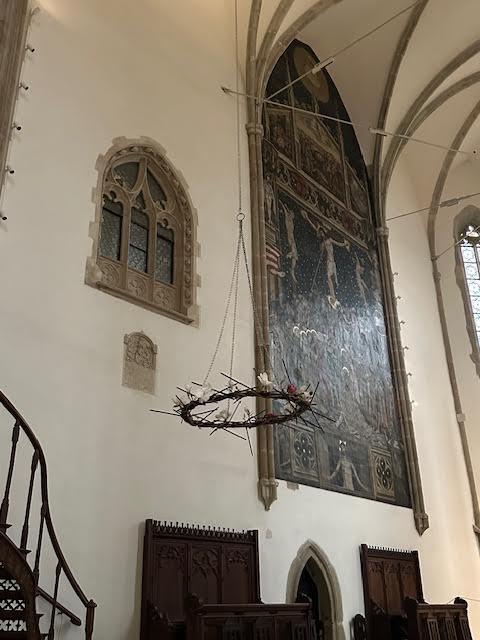
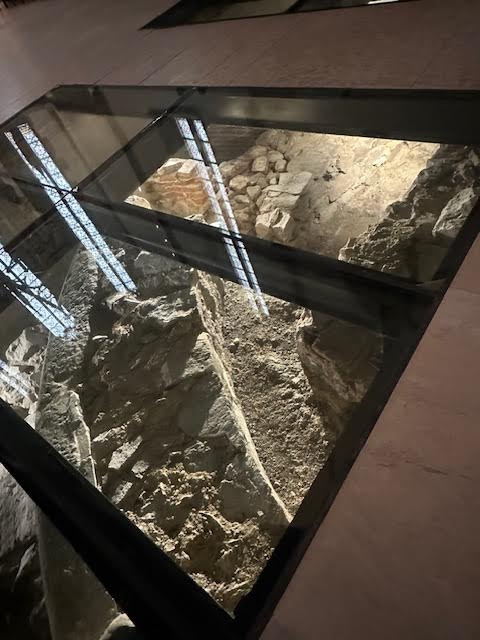
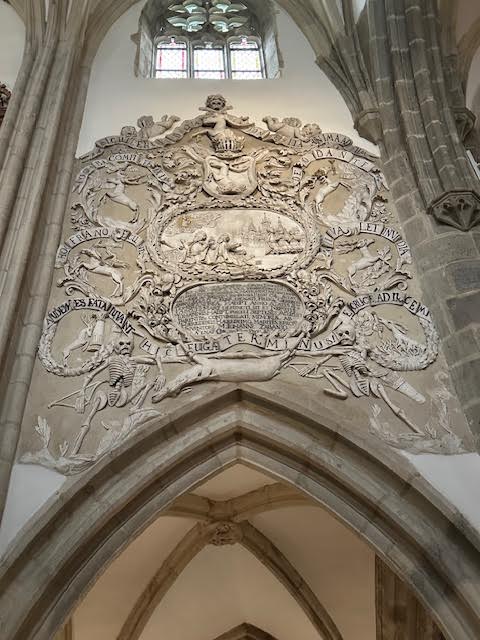
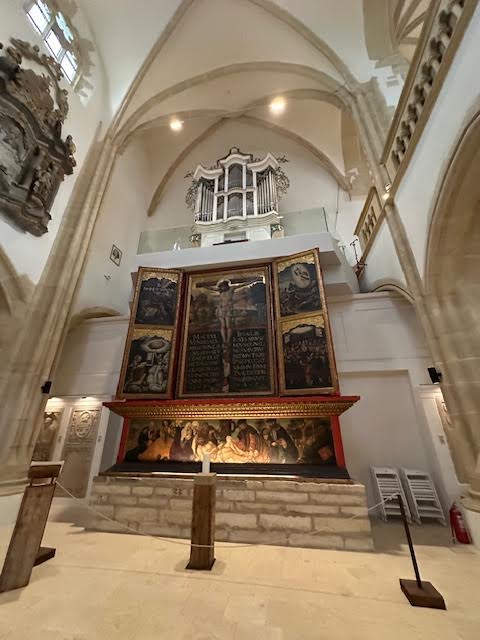
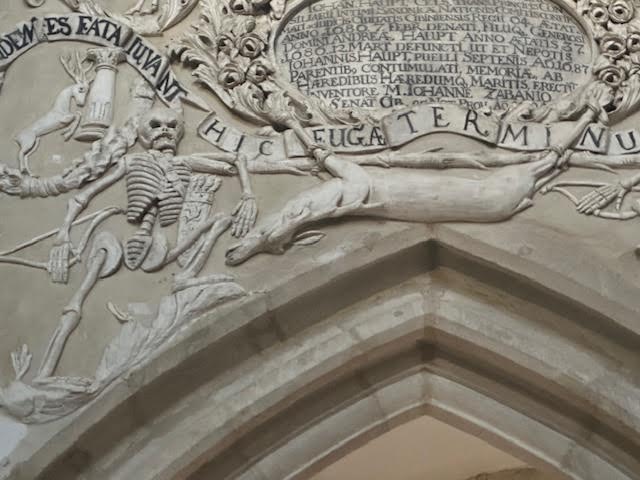
On the alter, under the crown of thorns, I saw what lay hidden beneath the holy ground. And when I looked up, to my left, depictions of skeletons engaged in animal slaughter. A clue perhaps, of the undead, so I took photos, but there was no mention of vampires, only ledger stones, old coffin lids, and stories of wealthy men.
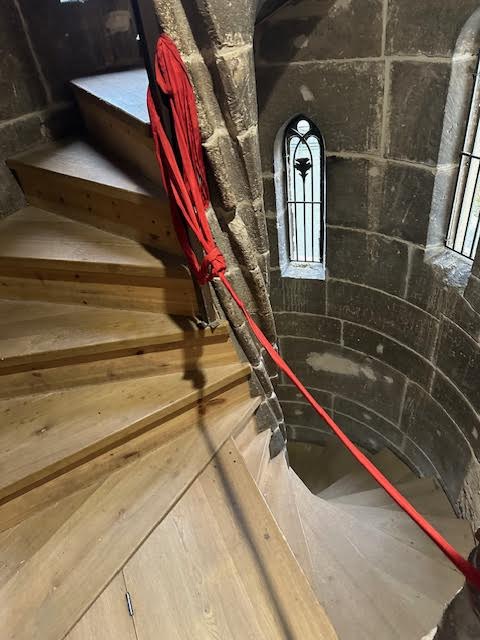
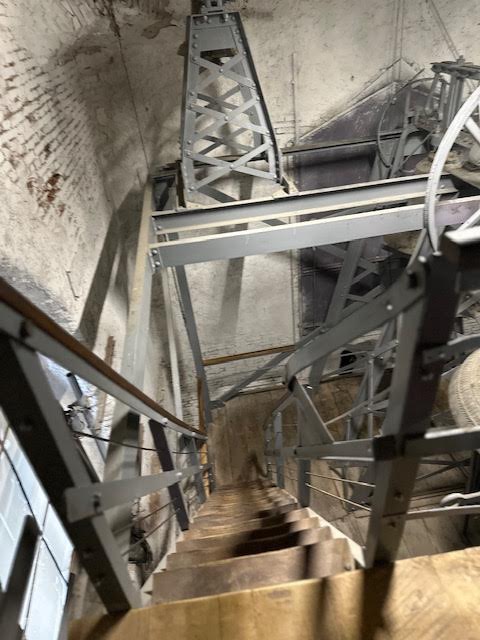
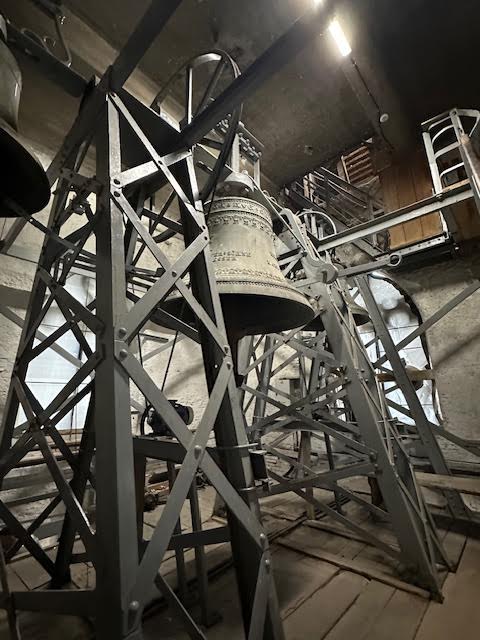
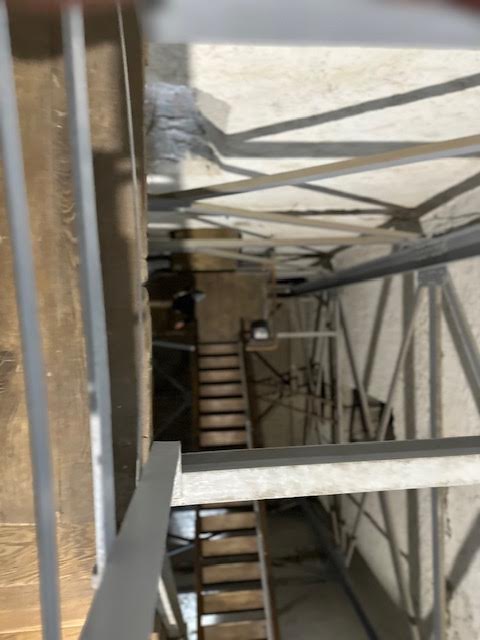
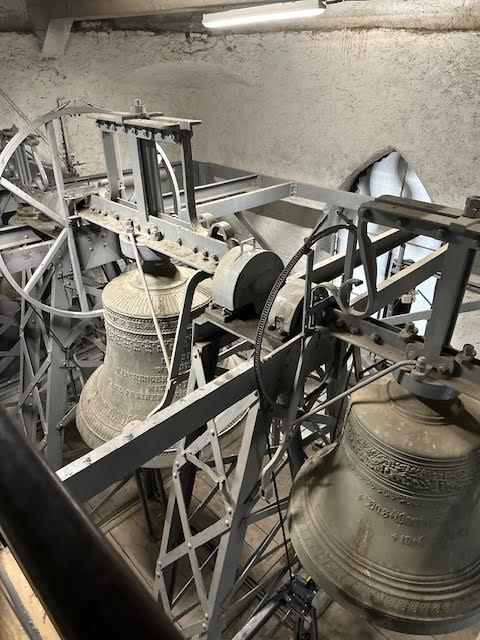
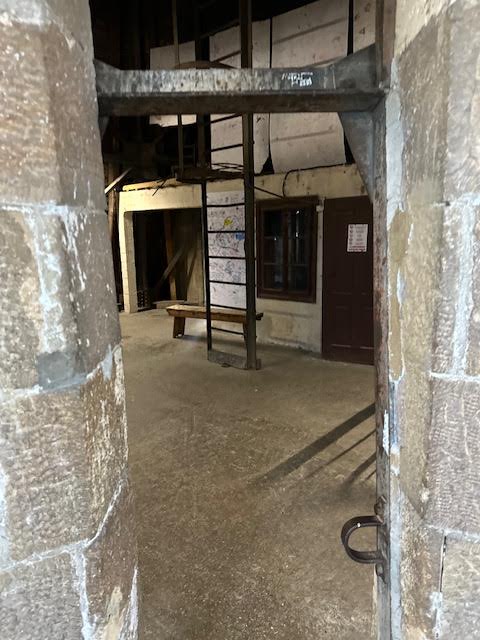
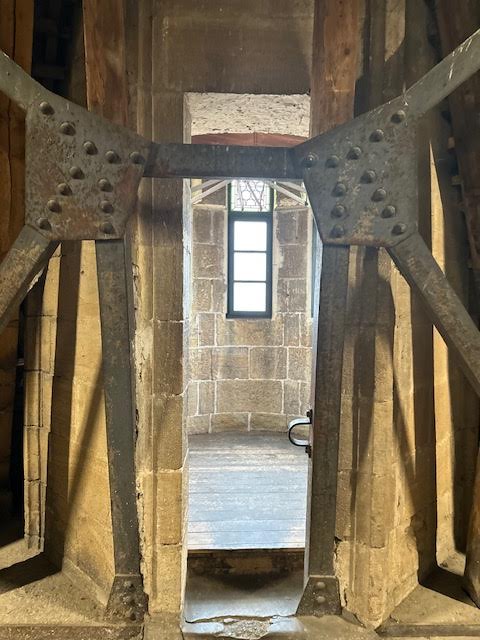
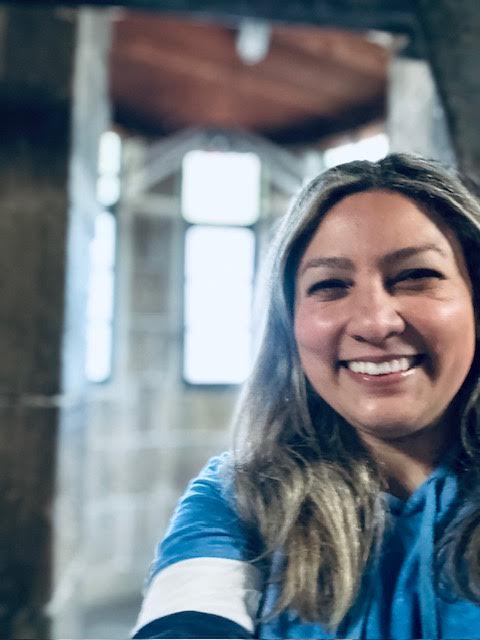
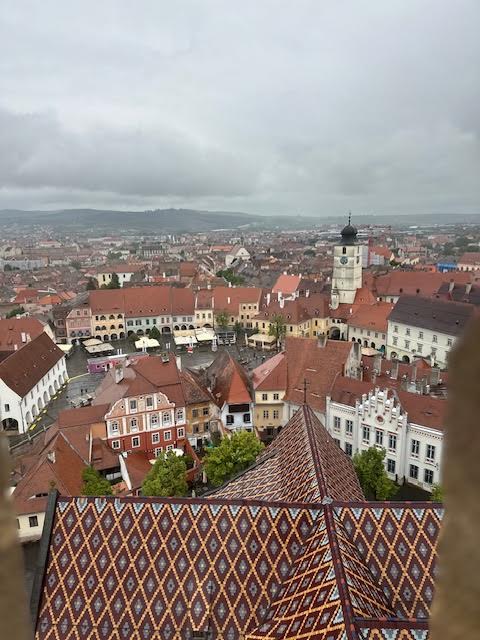
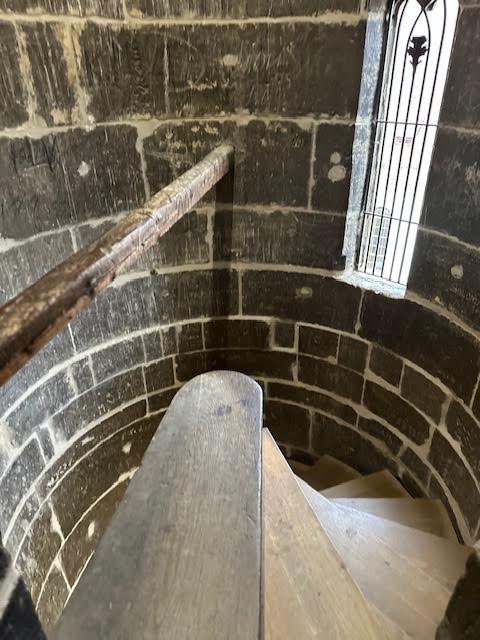
So, I headed up the spiral steps to the second floor, climbed several ladders to the church bells, and up further to the tower, to see the whole of Sibiu, to feel the history. When I reached the top, breathing heavy and still damp from the misting rain, I smiled. I wasn’t giving up. This was only the beginning of my journey into the heart of Transylvania. My next stop would take me to a legendary castle where it was rumored that Vlad was held captive for years. Surely, I would find evidence that vampires exist.
Dawn B~

 Dawn Berkoski
Leave a comment